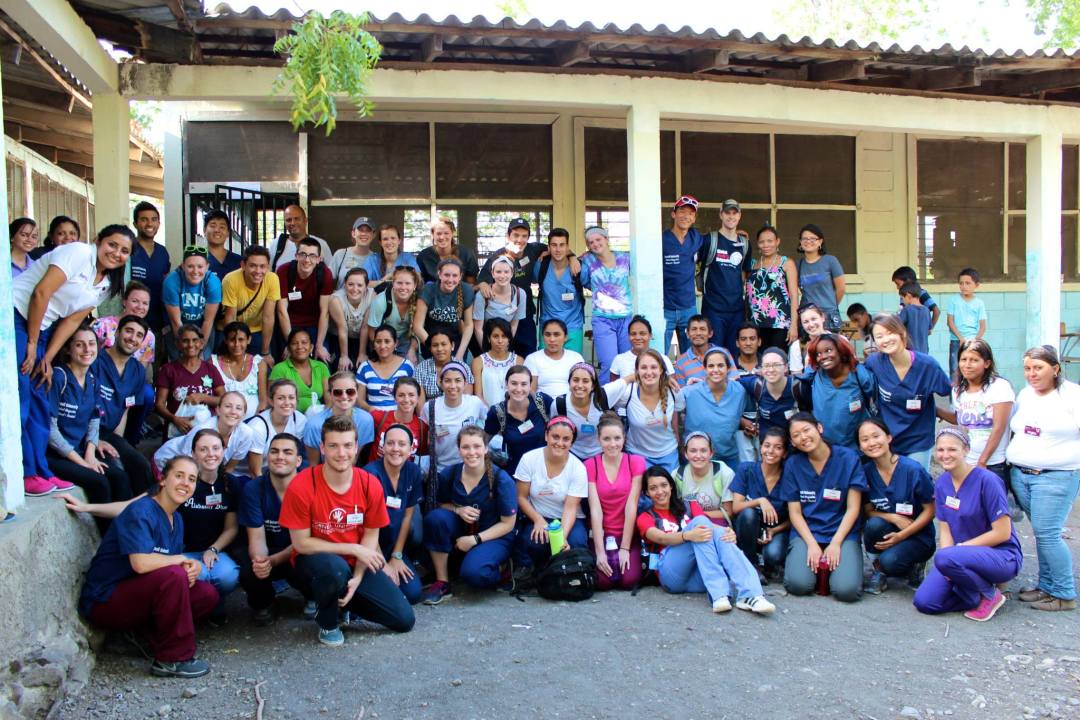
I was able to visit Honduras for the second time this May with Global Brigades, and it proved to be another amazing trip. Our excursion was six days long and we flew into the capital of Honduras, Tegucigalpa. From there we took a bus to the coast in San Lorenzo. For three days we treated citizens of Los Hatillos, a rural under-resourced community. The brigades were organized as a walk-in care clinic, starting with triage, as well as doctor consultations, an Ob/Gyn clinic, a pharmacy, and dental care. Each one working efficiently to serve the entire community, and in only three days we treated over 750 patients. Between the two brigades that I have traveled with, we have collectively treated over 1,550 patients, (804 patients on the first trip) in seven days. The primary symptoms were associated with contaminated drinking water, and tough living/working conditions. Many patients had stomach pains from parasites and arthritis, in addition to the chronic care patients with diabetes, asthma, and osteoporosis. It was surprising to find a lack of smoking related illness, obesity, and dementia. Mostly because it is too expensive to smoke, there is little to no fast food available, and my hypothesis on the latter is that death most likely occurs prior to onset. Although the average Honduran lives to 74.
For the fourth day we participated with the water brigade organization. This truly embodied holistic care because we were able to fix the root cause of some medical symptoms that we encountered. We helped to establish the largest initiative that Global Water Brigades has set out to achieve. Digging piping trenches in 100 degree heat and humidity. Hydration was important to say the least.
My heart goes out to the people of the Los Hatillos community and especially the children. They should have the same opportunities as everyone else and yet that is not a reality. Helping them to escape this demographic by improving their health is my number one concern. As an individual I was able to improve many children’s lives by teaching proper hygiene and applying fluoride to their teeth. I personally brought soccer balls and sporting equipment for the school. Although my encounter with each child was brief, I know that together we created a mutually lasting impact. Traveling to Honduras is part of my inspiration to pursue medicine further. It is my goal to continue providing holistic medical care to underserved communities around the world.
Here is a video from my medical brigade in 2013, credit to Julie Fortin

 Brian M. Hurley - from my perspective